| |
A smashed mannequin in the Nike showroom in Calcutta that was vandalised by anti-war
protesters. Picture by Amit Datta | Calcutta,
April 2: Uncle Sam is persona non grata. Coke is off diet, so is Pepsi.
Jeans — once a symbol of protest — is now under fire. And the guns are trained
on the more innocuous tea (Georgia and Lipton), banks (HSBC, Standard Chartered
and Grindlays) and soaps (Hindustan Lever, among other brands). America
is under fire, but not in Iraq. A pocket of Calcutta — in Metiabruz, the part
where much of the goods from foreign shores are dumped first — has taken the lead
in giving Uncle Sam the thumbs-down. Twenty-eight
organisations — from those publishing little magazines to some welfare organisations
and clubs — and many more individuals have banded together to lead a boycott of
all things American and British. Money talks,
they believe. That is why they have targeted the one area where even the mighty
US — and the once-mighty UK — are vulnerable, explains convener of Matir Kella
(the platform formed during the Gujarat riots) Hrishikesh Pal. “The
aggression we are seeing in Iraq is actually about money and that is where all
their strength comes from,” Asghar Ali, another leading light of the forum, said. The
makers, however, are not worried. Many (representatives of Brooke Bond and Lipton,
ITC and HLL) have not even heard of the boycott. And the ones who have heard,
like Britannia, are not bothered. “We will decide at a meeting (on Thursday) what
our next course of action will be,” Britannia sales officer Amlan Bhattacharya
said. If the protest, say its leaders, has — somewhat
predictably — originated from a minority-dominated area, it has not remained confined
to one community. “Hindus and Muslims are represented equally in this struggle,
which is essentially a humane (and not a communal) one,” claimed Jiten Nandi,
another forum leader. The forum has targeted children
and teenagers as they, according to the brains behind the boycott movement, are
the largest buyers of American and British products. Businessmen, especially traders
who sell the products, have also been spoken to. “We are not using force or vandalising
any shop but are requesting everyone to stop buying American or British products
till the two countries end their unjustified aggression,” Nandi added. It’s
not only the American or British firms — or their subsidiaries — which have been
targeted. Anything tenuously retaining a whiff of the two countries (for example,
Britannia biscuits) are now facing the music. A
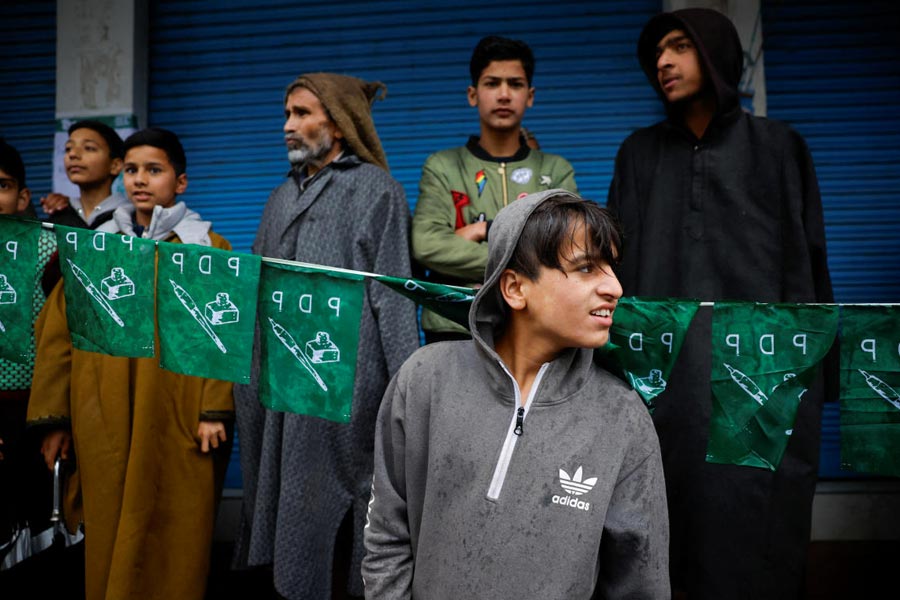
rally, in which many handicapped youth participated, was organised on Wednesday;
it snaked through the congested streets of Metiabruz, from the Bartala Moslem
Library to the police station, appealing to everyone to respond to “the call of
the hour”. The forum has started distributing
leaflets and has covered over 40 schools and madarsas in Metiabruz, over 50 clubs
and social welfare organisations and the lone college in the area. The
leaflets are a quadri-lingual affair, employing Bengali, Urdu, Hindi and English
to get their point across. Using pictures of the war — particularly women and
children in pain and anguish — they ask people to “boycott the following products
of US-UK and their subsidiaries in India”. On the
hit list - Pepsi and Coca-Cola products -
Britannia - Cadbury’s -
Kwality-Walls - HLL range of products -
ITC products - Colgate-Palmolive range -
Kodak - Gillette -
Nike and Reebok - Banks like HSBC, Citibank, Amex,
StanChart and Grindlays |