| New Delhi, March 31: The
Export Import (Exim) Policy for 2003-04 unveiled today in the backdrop of the
Gulf War aims to expand India’s export basket by focusing on the export of services
like healthcare, entertainment, education, tourism, and software. To
make up for possible loss of export earnings to the war-torn Gulf region, the
policy calls for a new trade focus on the former Soviet Union countries, with
which India had transactions worth $ 4.5 billion about 12 years back before the
collapse of the Union. That has now tumbled to a level of just $ 1.5 billion. The
thrust on services — which today accounts for over 48 per cent of the GDP — and
the attempt to re-establish ties with the CIS nations is designed to ratchet up
exports, which is expected to cross the $ 50-billion mark this year. Commerce
and industry minister Arun Jaitley, who unveiled the Exim policy, has set a target
of 12 per cent export growth in the coming fiscal. The broad objective is to help
India achieve 1 per cent share of the world merchandise trade by 2007. The
minister said, “We have to recognise that with the possible exception of the software
sector, we have not even made a beginning (in export of services). The new exim
policy, therefore, aims to give a major boost to the export of healthcare services
by allowing the duty-free import of consumables, office and professional equipment,
spares and furniture up to 10 per cent of the average foreign exchange earnings
in the previous three years or a bank guarantee in lieu of this for new enterprises.” The
Exim Policy has introduced a host of incentives to boost export of automobile
components and pharmaceutical products besides traditional foreign exchange grossers
like gems and jewellery, and textiles. It has also
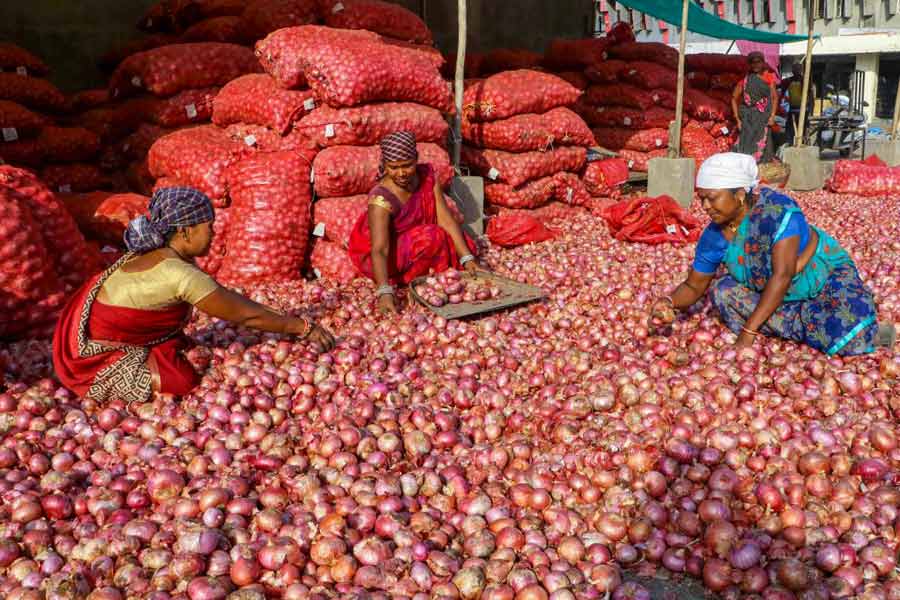
identified the farm sector as an area of core competence which will receive “special
treatment” as will special economic zones (SEZs). It also announced that sales
from the rest of the country to SEZs will be treated as exports and be eligible
for sops paid to normal exports. The government
has removed quantitative restrictions on import of 69 items covering animal products,
vegetables, spices, antibiotics and films, in consonance with its WTO commitments.
It also removed from the restricted list the export
of five items including rice, cotton linters, rare earth and silk cocoons. To
leverage the country's strength in entertainment services, the policy proposes
to promote through suitable tax incentives contributions to venture capital funds
which will provide finance to this sector which spans films, studio services,
animation graphics, television and radio programming. Discussions are on with
the finance ministry on the issue, he added. The
policy aims to give a further thrust to the agri-export processing zones (AEZs)
and special export promoting zones in order to make the country's exports
more competitive. The minister said that while the states had responded well to
the AEZ scheme, there was a dearth of resources for setting up state-of-the-art
infrastructure. The new policy proposes to associate
corporates with proven credentials to develop AEZs for boosting agri exports.
Another major initiative to boost agri and allied
products exports will be the modification of DEPB rates to take into account inputs
such as fertilisers, pesticides, and certified seeds used by farmers. Farmers
can now import duty free inputs if they plan to export their produce. This will
also apply to contract farmers. |