|
Experimentation is the name of the game for
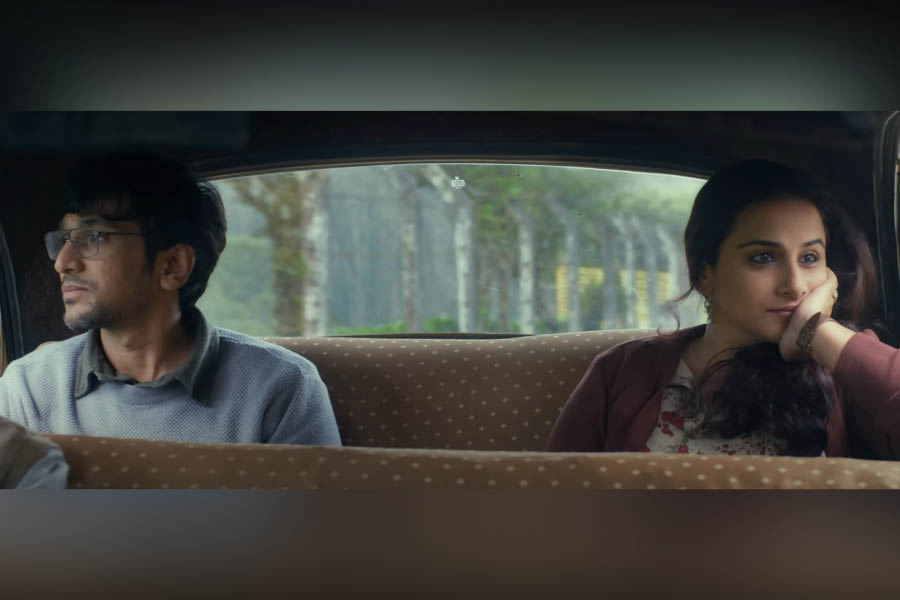
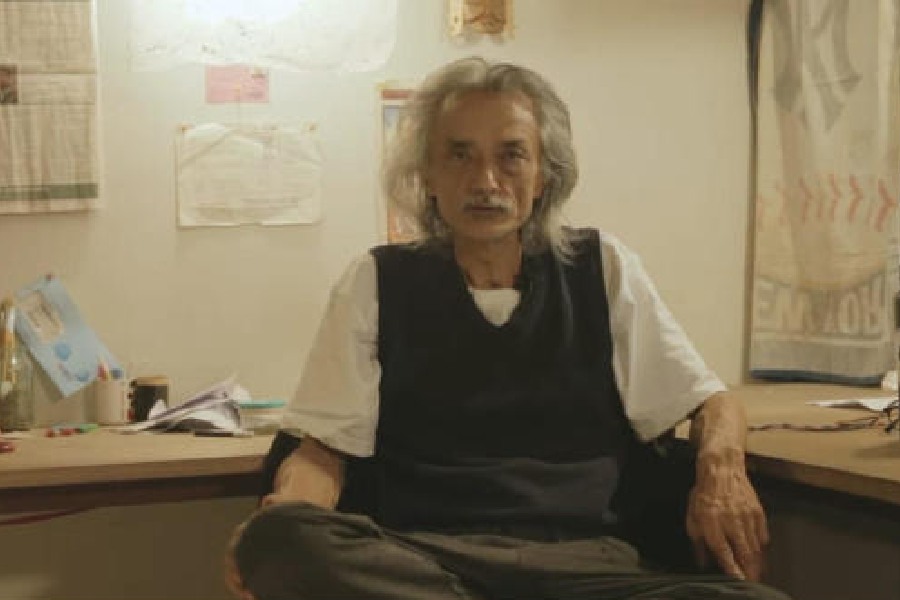
the reigning screen queen. Ever since motherhood and her Tollywood comeback, Rituparna
Sengupta has decided to be different. Small surprise then that she’s playing the
lead in Byatikrami, her first project with off-the-beaten-path director
Ashok Viswanathan. The film also stars Debika Mitra, Nandini Ghosal, Badshah and
Debjani Roy. Picture by Aranya Sen Care for some
mouth-watering heat ’n’ eat chicken biryani? Or a chunky chicken meatloaf
for that perfect breakfast sandwich? There’s delicious news for homemakers and
chicken freaks alike. Venky’s, the market leader in processed chicken products,
is back in Calcutta for a second innings, with a blueprint to invade every kitchen. “We
had underestimated the demand for our products in these parts the last time round
and our supply chain collapsed. This time, we have done our homework and Calcutta
homes can now have a steady diet of our value-added items,” says O.P. Singh, general
manager of Venky’s (India) Ltd, “Asia’s largest poultry integrated company”. For
the past four months, the chicken major has been testing the Calcutta palate with
its new range of “customised recipes” like chicken samosa, chicken keema
and hariyali tikka, through fairs, exhibitions and some retail outlets.
“We were at the Book Fair and around 40,000 people visited our stall every day,
with stocks running out in a couple of hours,” smiles Singh. The
“overwhelming response” has prompted Venky’s to put its chicken-in-a-minute delicacies
on the shelves of 160 Calcutta stores and the company hopes to retail from 350
points by end-March. Before the end of June, Venky’s will augment this retail
chain with 16-17 exclusive branded stores, to reach a penetration of “one outlet
every 1.5 km”. The company has incorporated “regional
eating habits” into its R&D for the East to come up with the biryani,
samosa and tikka to go with its mix of nuggets, sausages and salamis.
“Calcutta has a predominantly non-vegetarian population and we want to prove here
that chicken is the most economical source of protein, aiming to put it on the
plate at least once a day,” Singh says.The Venky’s branded stores will have literature
and interactive video kiosks for education and awareness on the nutritional aspects
and various pluses of poultry products. A Venky’s team is also embarking on an
awareness campaign on chicken in city schools and colleges this week. The
company, which has targeted a turnover of around Rs 10 crore by the year-end in
eastern India, has commissioned a 10-tonne cold-storage facility on the E.M. Bypass,
and has another 10-tonne capacity for deep-freezing. Singh is confident that the
Venky’s range of processed chicken products will be a “healthier and more nutritious
alternative” than most of the branded products now available in the market. “We
control our entire supply chain and our processing plant in Pune has the most
modern equipment and latest technology for plucking, de-feathering, de-boning
and packaging. Besides, our products conform to EU and USDA quality-control guidelines,”
the GM declares. Venky’s can spread its wings in
Bengal further, if the government reconsiders taxation on processed food, which
stands at “a stiff 17.25 per cent” as opposed to just four per cent in Uttar Pradesh
and 12 per cent in Maharashtra. “Calcutta can be one of our largest markets, since
West Bengal already has the second largest broiler population in the country,”
concludes Singh. — Subhro Saha
| |
| Experimentation is the name
of the game for the reigning screen queen. Ever since motherhood and her Tollywood
comeback, Rituparna Sengupta has decided to be different. Small surprise then
that she's playing the lead in Byatikrami, her first project with off-the-beaten-path
director Ashok Viswanathan. The film also stars Debika Mitra, Nandini Ghosal,
Badshah and Debjani Roy. Picture by Aranya Sen
| Two
cheers
Swabhumi — the Heritage Plaza, inaugurated
on February 17, 2001, celebrates its second anniversary with a three-day festival
‘Colours Of India’ — a meeting ground for craft, culture and cuisine from all
over India. The festival (February 15-17), to be open from 12 noon to 8 pm, will
showcase elements from Assam, Bihar, West Bengal, Andhra Pradesh, Orissa, Tamil
Nadu, Kerala, Karnataka, Madhya Pradesh, Chhattisgarh, Gujarat, Rajasthan, Uttar
Pradesh and Nagaland. Among
craft items, there will be handloom, and a variety of hand-embroidered works like
kantha, handprints, block, tie-and-dye and batik. Handicrafts include woodcarving,
brass and bell metal, folk paintings, cane and bamboo work, natural cosmetics
and spices, incense sticks, folk and tribal jewellery, terracotta, shoal, dokra,
iron works, stone-carving and sandalwood products. Traditional
cuisine at the festival will include north Indian, Mughlai, Chettinaad, Rajasthani,
Gujarati, Hyderabadi, Goan and Bengali dishes. A special attraction will be 20
varieties of authentic Bangla mishti including pithe, payesh, patishapta,
jibe gaja, kucho nimki, narkel pulao, kamlabhog, bhapa doi, bhapa makha and
sandesh. Cultural performances will feature
baulgaan from Bengal, Nacha and Pandwani singers from Chhattisgarh, folk songs
and dances from Gujarat and Punjab, Chenda Melam and Kaikottikkali from Kerala. Road
rage
After Kargil to Kanyakumari, it’s Koteshwar
in Gujarat to Kivithoo in Arunachal Pradesh. Having driven over 3,500 km for 10
days, the K2K-II team was in for a sweet treat in Calcutta, earlier this week.
With mishti, the sight of a sea of ambassadors and a stroll at Victorial
Memorial, for the four-man team on wheels out to study road and road behaviour,
it was time to relax. Well, almost. “Buses
and taxis are a big pain,” said Rishan Saam Mehta. “It’s as if they think non-stop
honking gives them right of way. And the buses give you barely a few inches to
pass. But after Bihar roads, it’s heaven.” Timeout
for a few hours for the team meant taking in the sights and sounds. “It’s criminal
to come to Calcutta and not have mishti doi and sandesh, so we had
to try both,” smiled Kartik ‘gadget guy’ Ganesh, in charge of the techno side
of the tour. He monitors the Global Positioning Satellite (GPS) system, and constantly
updates their location on the website nexgentracker.com. Mehta,
however, was busy “photographing the uniqueness of Calcutta”, not just Victoria
Memorial and the second Hooghly bridge. “My best was the picture of a traffic
jam, where every single car was an ambassador. In no other city in India will
you see that. Another favourite is the police sergeant in white uniform and black
boots, riding the red, shiny motorbikes.” The two
other team members are Vivek Bhat, a car whiz, and Farad Bhathena, former national
car rally champion. “I wouldn’t recommend anyone to drive from Varanasi to Calcutta.
It’s filth and chaos all the way, from the moment you leave Varanasi until it
peaks in Bihar. Once you enter West Bengal, it gets better,” observed Mehta. So,
while Ganesh shyly grinned about how the devotion to his first love — cars — had
earned him flak for missing the third Valentine’s Day in a row and his mother’s
birthday, Mehta was dreaming of a day in Kaziranga. And they were all looking
forward to finishing on the 15th and finally heading home on the 17th, leaving
behind the “smog, pollution and crazy drivers”. Australian
rhyme
Cricket and kangaroos. That still sums
up Australia for many of us. But even those who discovered the Nobel-winning novelist
Patrick White decades ago, find it difficult to lay hands on a good anthology
of Australian poetry with an affordable price tag. Writers’
Co-operative, in collaboration with the Shakespeare Society of Eastern India,
has brought out a selection of 300 years of Australian poetry along with the Bengali
translations. “The book is part of an ongoing project to serve world poetry on
the Bengali platter,” says Amitava Roy, a member of the editorial team. The choice
of Australian works this year was a “happy coincidence” for Writers’ Co-operative,
for Aussie authors Peter Carey and Kim Scott were also on a visit to the city
at launch time and were “only too happy” to do the honours at the Book Fair. The
collection, with a crisp introduction by Debnarayan Bandyopadhyay, encompasses
poetry from and on almost all major stages of the nation’s history — glorification
of the British imperialist mission in the 1850s (A New Britannia in Another
World: William Charles Wentworth), a critique of the valorisation that emerged
soon after (And Britannia, shouldst thou cease to have: Charles Harpur),
the voice of the aboriginals in Kath Walker or Colin Johnson, right down to modern
pensters like Judith Wright and Kenneth Slessor with their penchant for journey
as metaphor, bent on seeking their roots in the Old World (Britain), in the New
World (Americas) and in Asia. |